
WordPress vs Custom Web Development: Which Is Right for Your Business?
An architectural and financial comparison of open-source CMS versus tailored modern web engineering for mid-market and enterprise businesses.

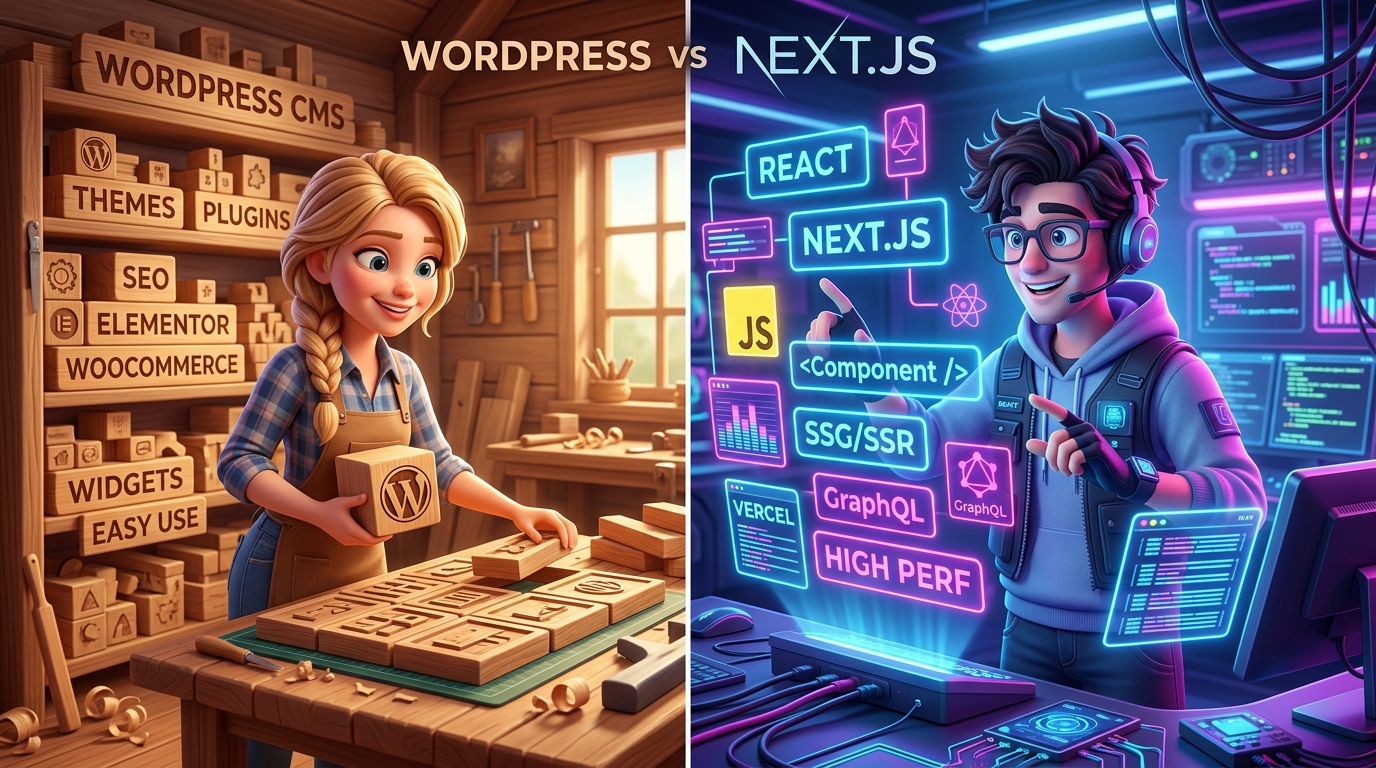
- 1. The False Dichotomy: Moving Beyond Dogma
- 2. Architectural Dissection: Monolithic CMS vs Custom Engineering
- 3. The 10-Point Head-to-Head Comparison Matrix
- 4. When WordPress Is the Smart Business Decision
- 5. When Custom Web Development Is an Operational Necessity
- 6. The Modern Hybrid: Headless WordPress Architecture
- 7. The Executive Decision Playbook
The debate between WordPress and custom web development is one of the most contentious—and frequently mischaracterized—conversations in modern software procurement. Traditional WordPress agencies often claim custom development is an expensive, unnecessary reinventing of the wheel. Conversely, hardcore software engineers often dismiss WordPress as an obsolete, insecure blogging platform unfit for commercial enterprise. The reality is that both platforms are powerful tools engineered for fundamentally different commercial objectives. Choosing the wrong foundation can saddle your organization with either suffocating technical debt or hundreds of thousands of dollars in over-engineered software. This guide provides an unbiased, systems-level engineering comparison between WordPress and custom web engineering to help your leadership team make the optimal architectural decision.
WordPress is ideal for content-heavy marketing websites, blogs, and standard business sites where non-technical editorial teams require visual publishing tools with modest initial budgets. Custom web development (using Next.js, React, Node.js, and custom databases) is the superior architectural choice when your website requires proprietary business workflows, client portals, sub-second Core Web Vitals, maximum cybersecurity immunity, and long-term intellectual property ownership.
1. The False Dichotomy: Moving Beyond Dogma
Why declaring a universal winner harms business outcomes
Over 40% of the web runs on WordPress. It powers everything from personal neighborhood blogs to high-traffic news publications like TechCrunch and Sony Music. At the same time, the world's most successful digital-first companies—from Airbnb and Stripe to fast-scaling fintechs and B2B SaaS platforms—build their web experiences using custom frontend frameworks like Next.js React and bespoke cloud microservices.
Neither platform is universally superior. The correct question is not 'which is better?' but rather: 'What is the primary commercial role of your web presence?'
If your website is primarily an editorial marketing vehicle designed to publish articles, case studies, and corporate announcements, WordPress is a mature, cost-effective engine. If your website is an interactive business tool—processing customer data, executing underwriting calculations, managing multi-tier permissions, or handling thousands of concurrent API requests—forcing WordPress into that role creates severe operational instability.
2. Architectural Dissection: Monolithic CMS vs Custom Engineering
Understanding the underlying plumbing that drives performance and security
To understand the divergence between both approaches, we must examine how they handle a user request:
In a traditional monolithic WordPress setup, when a visitor requests a URL, the server executes PHP code, queries a MySQL database multiple times to assemble content, compiles plugins, renders the visual theme, and sends an HTML document back to the browser. As a site grows and accumulates 20 to 40 plugins for SEO, forms, analytics, and caching, each page view triggers dozens of redundant database queries, leading to server CPU spikes and sluggish Time to First Byte (TTFB).
In contrast, modern custom web development utilizes decoupled architecture. Pre-rendered HTML is served from global edge CDN networks in under 50 milliseconds. Interactive components hydrate selectively, and backend business logic executes inside isolated, serverless cloud functions connecting to high-speed PostgreSQL or Redis databases. The frontend interface is completely decoupled from database queries, rendering the platform virtually immune to traditional CMS database injection attacks.
3. The 10-Point Head-to-Head Comparison Matrix
An objective evaluation across core technical and operational criteria
We evaluate WordPress against custom engineering across the 10 dimensions that dictate long-term commercial success:
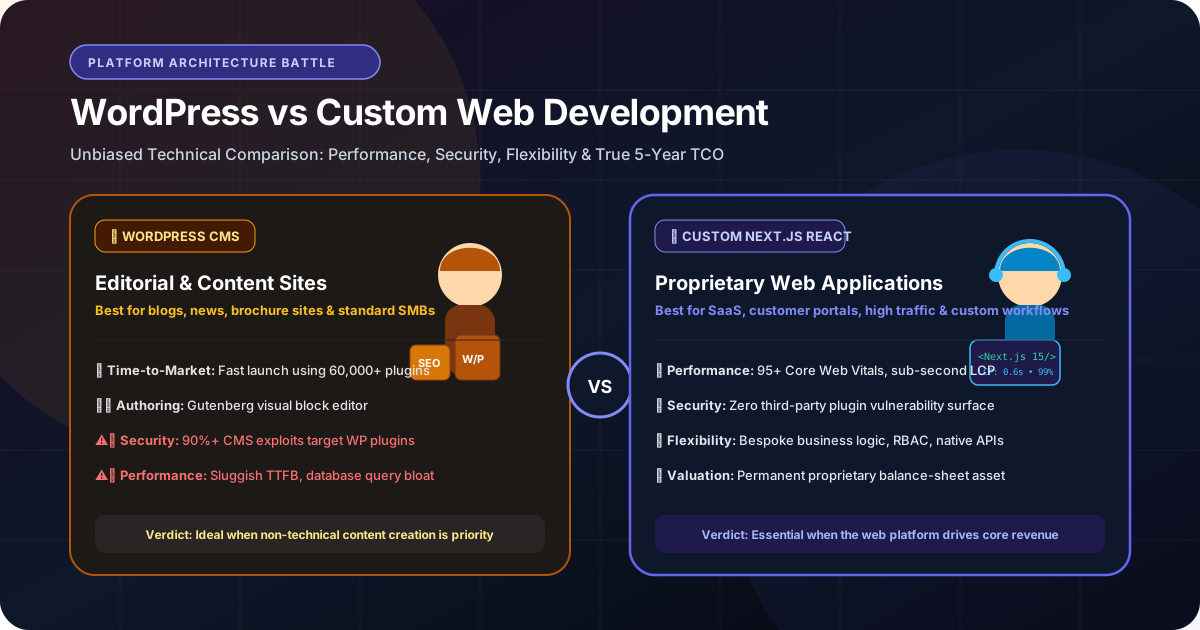
| Evaluation Dimension | WordPress (Standard CMS) | Custom Web Development (Next.js/React) |
|---|---|---|
| Initial Development Cost | Lower ($1,500 – $6,000 for standard sites) | Moderate to High ($5,000 – $25,000+) |
| Time to Market | Fast (2 to 6 weeks using themes/plugins) | Moderate (6 to 14 weeks bespoke engineering) |
| Core Web Vitals & Speed | Requires aggressive caching; 40-75 mobile score common | Built for 95+ Core Web Vitals; sub-second LCP |
| Cybersecurity Vulnerabilities | Frequent target; 90%+ CMS attacks target WP plugins | Immense security; zero public plugin attack surfaces |
| Content Authoring Experience | Superb; Gutenberg visual blocks & media library | Requires headless CMS setup (Sanity/Strapi) |
| Custom Business Logic | Severely constrained by PHP hook architecture | Unlimited; bespoke algorithms & workflow pipelines |
| Maintenance & Patching | High overhead; weekly plugin/theme/core updates | Minimal; compiled immutable code deployments |
| Scalability & High Concurrency | Requires Redis/Varnish caching to withstand traffic spikes | Effortless auto-scaling on serverless edge clusters |
| Third-Party API Integration | Relies on generic third-party plugins or webhooks | Direct, type-safe API microservices and middleware |
| Long-Term Code Ownership | Dependent on third-party plugin developers & updates | 100% proprietary intellectual property asset |
4. When WordPress Is the Smart Business Decision
Scenarios where open-source CMS provides unbeatable commercial leverage
WordPress is often the most financially pragmatic solution in the following scenarios:
• High-Volume Content Publishing: Media companies, news blogs, and marketing teams that produce 10+ articles weekly require WordPress's mature editorial interface, draft approvals, and media tagging tools.
• Standard Informational Brochure Sites: Local businesses, legal practices, and consulting firms needing an attractive 5 to 15-page presence without complex interactive logic or customer accounts.
• Early-Stage Market Validation: When testing a new business concept with limited capital ($2,000 to $4,000), launching on a clean WordPress install allows rapid iteration without heavy software commitments.
• Internal Non-Technical Maintenance: If your company lacks in-house technical personnel and relies on non-technical marketing coordinators to update text, swap banners, and publish announcements.
If you choose WordPress, hire an agency that builds a custom lightweight theme from scratch without visual page builders (like Elementor or Divi). A custom-coded WordPress theme avoids 80% of the bloat and security vulnerabilities that plague off-the-shelf templates.
5. When Custom Web Development Is an Operational Necessity
When generic CMS architectures break down and stifle company growth
Custom web development becomes mandatory when your digital asset extends beyond content delivery into software execution:
• Proprietary Operational Workflows: If your website requires multi-step underwriting forms, custom price algorithms, automated PDF generation, or interactive calculation tools that no off-the-shelf plugin handles correctly.
• Secure Client Portals & Dashboards: B2B companies, financial institutions, and insurance brokerages—such as our work on the Sterling Wholesale Insurance Portal—require isolated user permissions, encrypted document vaults, and absolute data privacy that WordPress cannot securely deliver.
• Mission-Critical Cyber Compliance: Healthcare, fintech, and enterprise organizations subject to HIPAA, SOC2, or strict regulatory scrutiny where third-party plugin vulnerabilities present unacceptable liability.
• High-Concurrency Performance Requirements: Sites experiencing thousands of simultaneous transactional users where sluggish database queries translate directly into millions in lost revenue.
• Building Enterprise Value & IP: Investors and acquirers assign virtually zero IP valuation to a template WordPress site, whereas proprietary, well-documented custom code is recognized as a tangible balance sheet asset.
6. The Modern Hybrid: Headless WordPress Architecture
Combining WordPress editorial power with modern Next.js frontend performance
For organizations that require the familiar editing interface of WordPress but demand the performance, security, and design freedom of modern engineering, headless web development offers the ideal middle ground.
In a headless configuration, WordPress is used strictly as a content database behind firewall protection. Marketing teams continue to write blog posts and manage media inside the familiar WordPress dashboard. However, the public-facing frontend is a custom-engineered Next.js React application that fetches content via the WordPress REST API or GraphQL.
This delivers the best of both worlds: editors get their favorite CMS, while visitors experience blazing-fast 95+ Core Web Vitals with zero exposure to public WordPress plugin vulnerabilities.
7. The Executive Decision Playbook
A simple 3-question diagnostic to select your technology stack
Use this diagnostic to align your leadership team:
1. 'Do users log in to perform work, or do they simply read information?' If users log in to manage accounts, execute transactions, or access documents, choose Custom Web Development.
2. 'Does our business model depend on proprietary workflows that give us a competitive edge?' If yes, custom software protects your competitive moat.
3. 'Is our marketing team publishing multiple pieces of content daily without engineering support?' If yes, choose a managed WordPress or headless CMS setup.
Key Strategic Takeaways
- WordPress excels at content-first marketing sites, blogs, and standard SMB digital presences.
- Custom development is essential for web applications, client portals, SaaS products, and high-security compliance.
- WordPress websites require frequent plugin updates and vulnerability monitoring; custom code offers higher reliability and zero plugin bloat.
- A headless WordPress architecture decouples the CMS backend from a high-speed Next.js frontend, bridging the gap between editorial ease and engineering performance.
- Explore RankVRA's [custom web development services](/services/web-development) to evaluate the ideal stack for your operational goals.
The Bottom Line & Next Steps
Neither WordPress nor custom web development is inherently better; each is an engineering instrument optimized for distinct commercial outcomes. By honestly assessing your team's editorial workflows, security requirements, and long-term software roadmap, you can choose the platform that accelerates your business without wasting capital or accumulating technical debt.
Questions Business Leaders Ask About WordPress vs custom web development
Is custom web development always more expensive than WordPress?▾
Initially, custom web development requires a higher upfront engineering investment. However, over a 3 to 5-year timeline, WordPress sites frequently accumulate substantial costs in premium plugin licenses, emergency malware cleanups, performance optimization plugins, and developer hours spent resolving plugin conflicts. For complex web platforms, custom code often has a lower total cost of ownership.
Can WordPress handle 100,000+ monthly visitors?▾
Yes, WordPress can easily handle 100,000+ monthly visitors provided it is hosted on robust cloud infrastructure (AWS/Cloudflare) and utilizes aggressive server-level caching (Redis, Varnish, object cache). However, high concurrent logged-in users bypass caching and require significant server horsepower.
Can our existing WordPress website be migrated to custom Next.js?▾
Yes. At RankVRA, we frequently migrate legacy WordPress sites to modern Next.js architectures. We export your existing blog and page content into modern headless CMS platforms (or maintain WordPress headlessly) while completely re-engineering the frontend for sub-second speeds and zero loss of search rankings.
Is custom web development secure from hackers?▾
No system is 100% immune, but custom web applications eliminate the primary vector of web cyberattacks: automated bots scanning for known vulnerabilities in popular WordPress plugins and themes. With custom Next.js code, there are no public admin login URLs (/wp-admin) or third-party plugin vulnerabilities.

Written by Naveen Panchal
AuthorFounder & Lead Technical Architect, RankVRA
Naveen Panchal is the Founder and Technical Director of RankVRA. He specializes in full-stack web engineering, Next.js architecture, and high-performance digital systems for clients across the US, UK, Canada, and India.
Explore Core Commercial Capabilities
Bespoke full-stack web engineering for modern enterprises.
High-converting UI/UX design systems tailored to your brand.
Replatform legacy systems to modern high-speed architectures.
Scalable B2B portals and internal operations platforms.
- WordPress.org: WordPress Security Best PracticesOfficial Reference
- Next.js / Vercel: Next.js Architecture DocumentationOfficial Reference
- MDN Web Docs: MDN Web Security GuidelinesOfficial Reference
Unsure Whether WordPress or Custom Code Fits Your Goals?
Schedule a 30-minute architectural consultation with RankVRA. We will review your operational requirements, editorial workflows, and scaling roadmap to provide an objective, vendor-neutral recommendation.
Related Growth Blueprints
Explore more strategic articles from the RankVRA engineering desk.
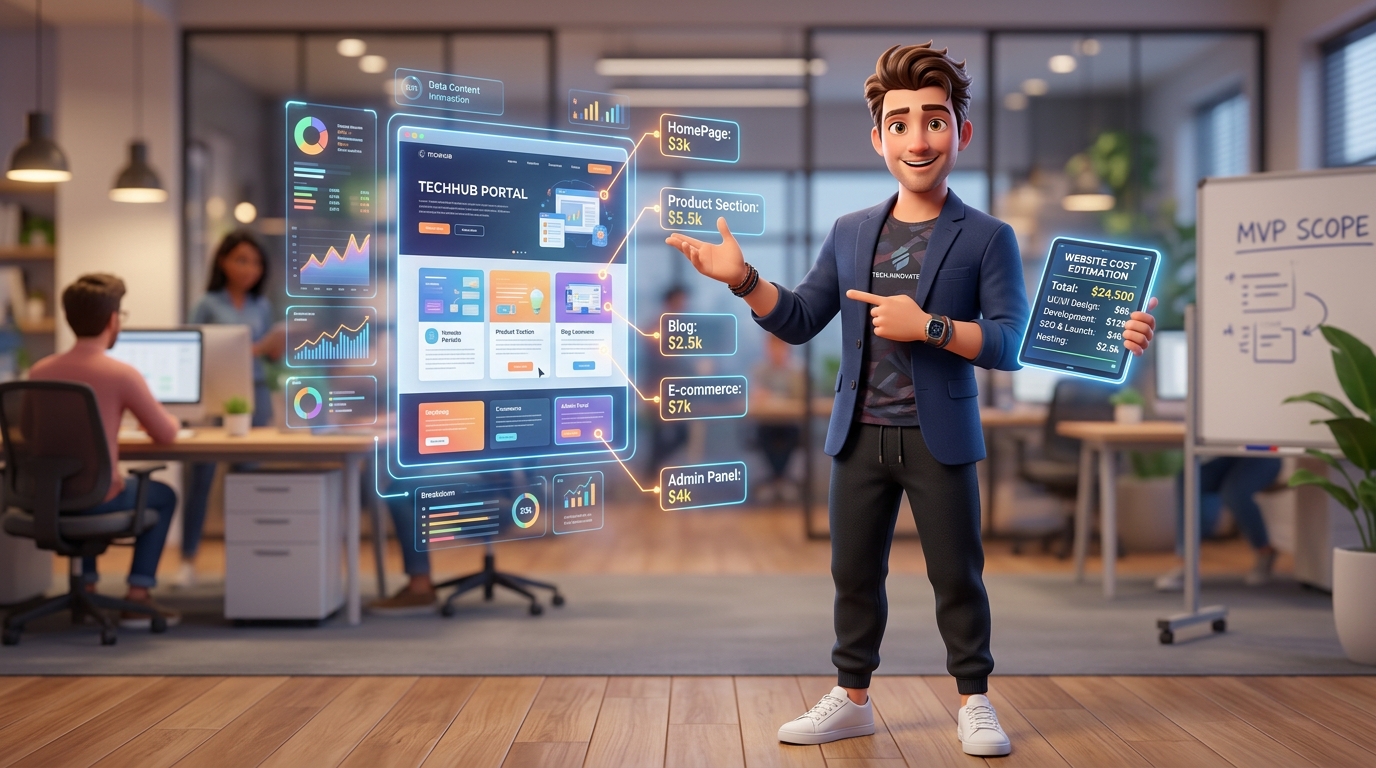
How Much Does It Cost to Build a Business Website in 2026?
How much does a business website cost in 2026? Explore the real cost drivers—design complexity, page count, CMS, custom integrations, security, and maintenance.

What Is Headless Web Development and When Should a Business Use It?
What is headless web development? Learn how decoupling your frontend from backend CMS and ecommerce systems impacts speed, omnichannel reach, cost, and maintenance.
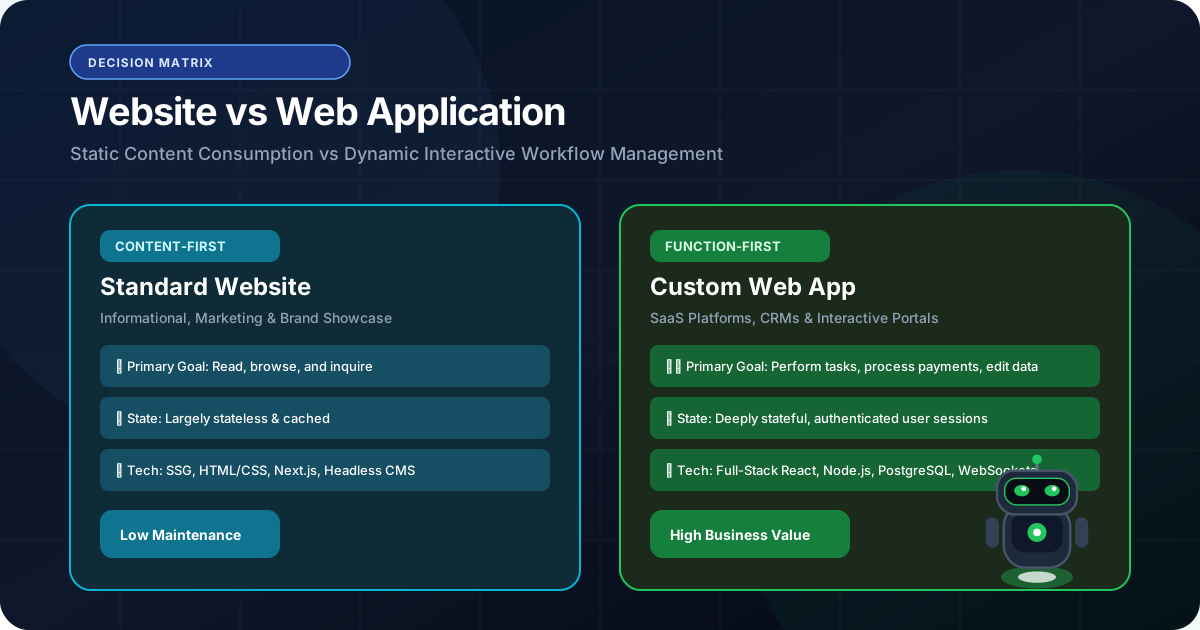
Website vs Web Application: What Is the Difference?
What is the difference between a website and a web application? Compare architecture, costs, user interactivity, databases, and business objectives.
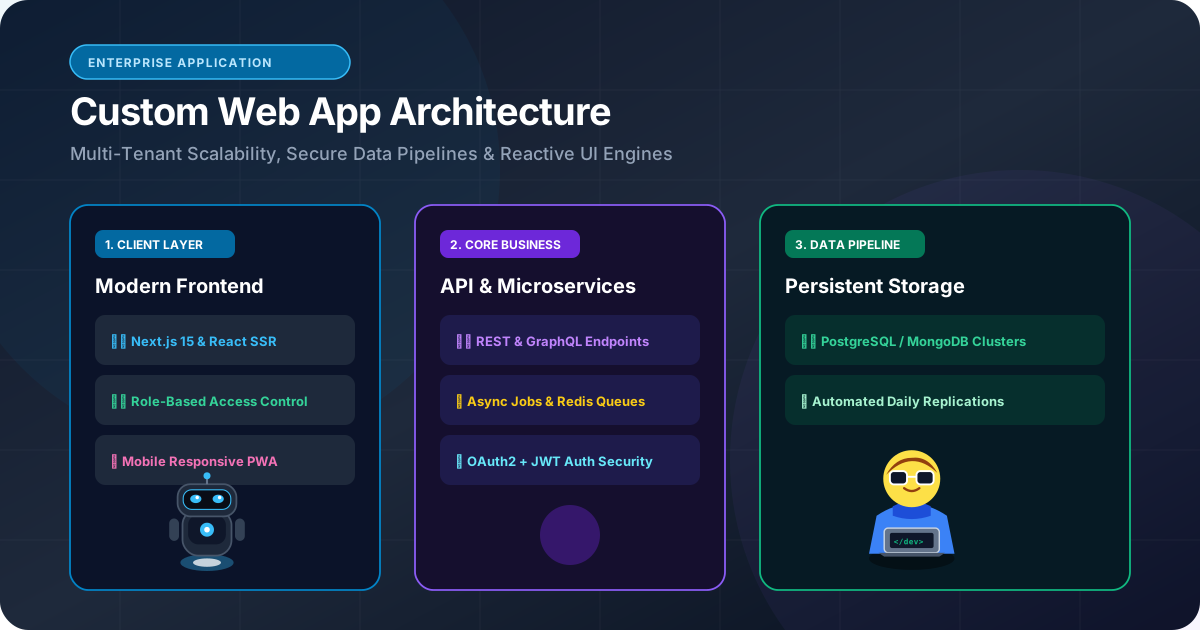
Custom Web Application Development: When Should a Business Build a Custom Web App?
When should a business build custom web applications instead of subscribing to SaaS? Learn how custom portals, wholesale dashboards, and bespoke workflows deliver compounding ROI.