
Schema Markup for SEO: How to Claim Google Rich Snippets and Knowledge Panels
The developer and SEO guide to JSON-LD structured data implementation that surges organic CTR by up to 35% across search engines.

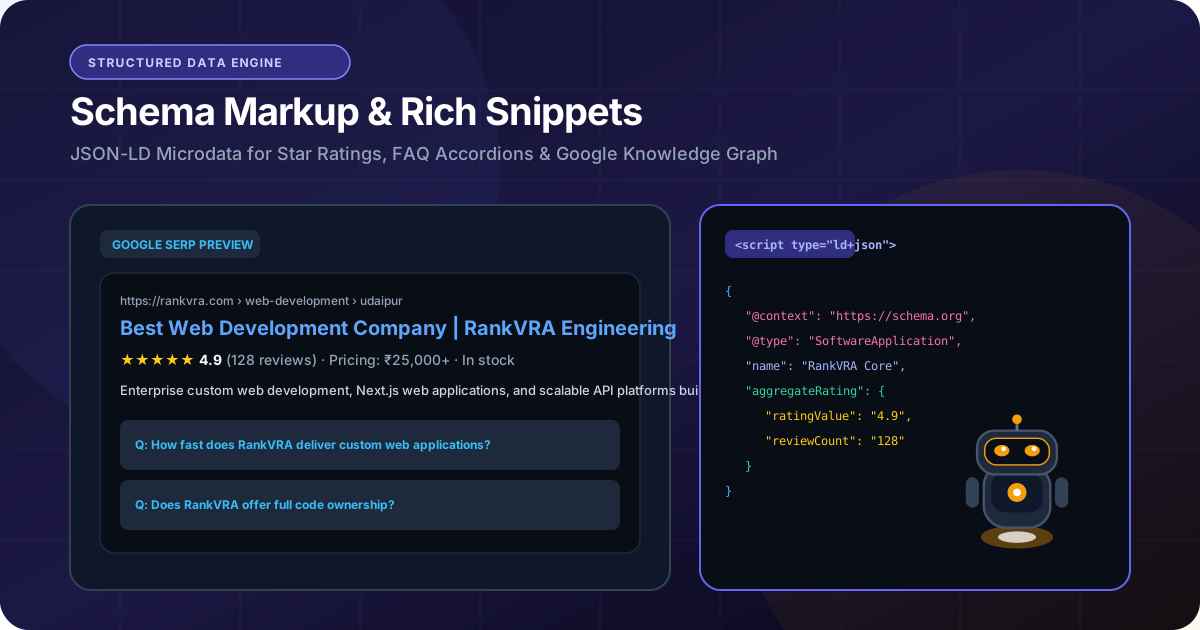
- 1. What Schema Markup Is and Why It Drives Higher CTR
- 2. The Critical Schema Types Every Business Needs
- 3. Connecting Entities: Organization, Founder & SameAs Graphs
- 4. FAQ and Product Schema Implementation in Modern Next.js
- 5. Validating Structured Data with Google Rich Results Test
- 6. Preparing Content for AI Search Engines & LLM Citations
Search engines are exceptionally sophisticated, but at their core, web crawlers do not understand text the way human beings do. When Googlebot crawls an unannotated page reading '₹15,000' and '4.9 stars', it must guess whether that represents a hotel room price, a product cost, or an average review. Schema markup (structured data using Schema.org vocabulary in JSON-LD format) removes all ambiguity. It translates your website's content into an explicit machine-readable semantic language that directly feeds Google's Knowledge Graph. Implementing comprehensive structured data does not just earn eye-catching rich snippets—such as review stars, price tags, and collapsible FAQ boxes that boost search Click-Through Rates (CTR) by up to 35%—it also serves as the foundational data layer required for generative AI engines like Google Gemini and ChatGPT to cite your brand. This guide provides the complete developer blueprint for modern schema engineering.
1. What Schema Markup Is and Why It Drives Higher CTR
Transforming standard blue links into high-visibility interactive rich snippets
Schema markup is a standardized vocabulary of tags (microdata or JSON-LD scripts) created by Google, Microsoft, Yahoo, and Yandex in 2011 to help search engines understand the relationships between people, places, organizations, and concepts on the web.
While schema is not a direct ranking factor in the traditional sense, its impact on user behavior is profound. A standard organic listing occupies roughly 80 pixels of vertical screen space on mobile. A listing enhanced with rich snippets—featuring gold review stars, pricing badges, and two collapsible FAQ answers—occupies over 220 pixels of mobile screen space.
By visually dominating the Search Engine Results Page (SERP) and answering critical user questions upfront, rich snippets capture user attention away from higher-ranking competitors, boosting CTR by 20% to 35%.
- Dominates mobile SERP vertical screen real estate, pushing competitors below the fold.
- Visual trust signals (gold review stars and price badges) increase user click confidence.
- Clarifies brand entities for inclusion in Google Knowledge Panels and Google Maps.
2. The Critical Schema Types Every Business Needs
The core semantic entities that define high-performing commercial websites
Different page types require specific structured data implementations. Never slap a generic Organization schema on every page and call it a day.
Your homepage must feature a comprehensive `Organization` or `LocalBusiness` schema detailing legal name, telephone, geo-coordinates, founder relationships, and official social media profile links via `sameAs`.
Service pages require `Service` and `WebPage` schemas; blog articles require `Article` or `BlogPosting` schemas with author entity references; and eCommerce products require detailed `Product` and `Offer` schemas.
| Schema Type | Target Page | Key Properties | Visual SERP Feature |
|---|---|---|---|
| Organization / LocalBusiness | Homepage & Contact Page | name, address, telephone, geo, sameAs | Google Knowledge Panel & Local Pack mapping |
| Article / BlogPosting | Editorial Blog Posts | headline, image, author, datePublished | Top Stories carousel & Article snippet |
| FAQPage | Service & Pricing Pages | mainEntity -> Question -> acceptedAnswer | Collapsible Q&A rich dropdowns in SERP |
| Product & Offer | eCommerce & Catalog Pages | sku, price, priceCurrency, availability | Live price badge, in-stock tag & star ratings |
| BreadcrumbList | All Pages except Homepage | itemListElement, position, name, item | Clean hierarchical breadcrumb trail in URL bar |
3. Connecting Entities: Organization, Founder & SameAs Graphs
Building interconnected semantic networks instead of isolated data islands
Amateur SEO implementations paste fragmented, isolated schema blocks into different templates. Advanced technical SEO connects all entities into a unified, interconnected `@graph`.
Using explicit `@id` URI identifiers, you can connect your `Organization` directly to its `Founder` (a `Person` entity), link the founder's external credentials via `sameAs` (LinkedIn, GitHub, Twitter), and associate the company's core services back to the parent business.
This interconnected entity graph provides Google with verified proof of Expertise, Experience, Authoritativeness, and Trustworthiness (E-E-A-T), insulating your domain from algorithmic quality demotions.
Always package your page schemas inside a single JSON-LD array under @graph. This allows Google's crawler to traverse entity relationships (e.g., Article -> author -> Person -> worksFor -> Organization) in a single parse pass.
4. FAQ and Product Schema Implementation in Modern Next.js
Injecting server-rendered JSON-LD safely in Next.js App Router
In Next.js App Router, injecting JSON-LD structured data is clean and performant. Because Next.js renders Server Components into static HTML on edge nodes, Googlebot reads your schema in the very first network response without executing client JavaScript.
Define your schema objects as typed TypeScript interfaces and serialize them into standard `<script type='application/ld+json'>` tags inside your layout or page components using `dangerouslySetInnerHTML={{ __html: JSON.stringify(schemaObject) }}`.
This ensures zero client-side hydration overhead, zero layout shifts, and 100% crawl accessibility for all search engine bots.
5. Validating Structured Data with Google Rich Results Test
Eliminating fatal syntax errors, missing fields, and schema warnings
A single misplaced comma or missing mandatory attribute (like `price` in an Offer schema or `author` in an Article schema) will cause Google to silently reject your structured data.
Always validate newly deployed templates using two official tools: Google's Rich Results Test (which verifies eligibility for visual search enhancements) and the Schema.org Validator (which validates syntax conformity against the global semantic standard).
6. Preparing Content for AI Search Engines & LLM Citations
Why structured data is the primary ingestion protocol for Generative Engine Optimization (GEO)
Generative AI engines—including Google AI Overviews, Perplexity AI, and OpenAI Search—do not read websites linearly. They extract semantic entities, comparative data tables, and structured facts to synthesize answers.
When your content is backed by rich JSON-LD schema, AI models can verify facts with absolute confidence, dramatically increasing the probability that your brand is cited and recommended as the authoritative primary source in AI-generated answers.
The Bottom Line & Next Steps
Schema markup is no longer an optional SEO cosmetic; it is the fundamental semantic bridge between your website and the future of search. High-performance schema engineering earns rich snippets, surges click-through rates, and establishes unshakeable entity authority. RankVRA engineers custom web architectures with complete semantic graph structures built directly into every deployment. Discover our technical SEO services, explore our web development capabilities, or request a Free Growth Audit today.
Questions Business Leaders Ask About Schema Markup for SEO
Does adding schema markup directly improve my Google search ranking?▾
Schema markup is not a direct ranking factor, but it produces rich snippets (review stars, prices, FAQs) that significantly increase click-through rates (CTR). Higher organic CTR and engagement signals frequently lead to indirect ranking improvements over time.
What is the best format for structured data: JSON-LD or Microdata?▾
Google officially recommends JSON-LD (JavaScript Object Notation for Linked Data). JSON-LD is injected within a clean script tag in the page head or body, keeping code separate from HTML presentation markup and preventing layout breaks.
Why did my FAQ schema stop showing up in Google Search results?▾
In late 2023, Google updated its search guidelines to restrict FAQ rich snippets primarily to authoritative government, health, and established educational websites for general queries to clean up SERP clutter. However, FAQ schema remains vital for entity clarity and AI engine citations.
How do I test if my schema markup has errors or warnings?▾
Use Google's official Rich Results Test tool (search.google.com/test/rich-results) to verify if your page qualifies for rich snippets, and the Schema.org Validator (validator.schema.org) to check overall semantic syntax.

Written by Naveen Panchal
AuthorFounder & Lead Technical Architect, RankVRA
Naveen Panchal is the Founder and Technical Director of RankVRA. He specializes in full-stack web engineering, algorithmic search optimization, and performance funnels for hospitality, manufacturing, and local service enterprises across Rajasthan and internationally.
Want to implement these strategies for your business?
RankVRA engineers high-speed web platforms, localized Google Maps dominance, and algorithmic SEO funnels that turn searchers into long-term clients.
Related Growth Blueprints
Explore more strategic articles from the RankVRA engineering desk.
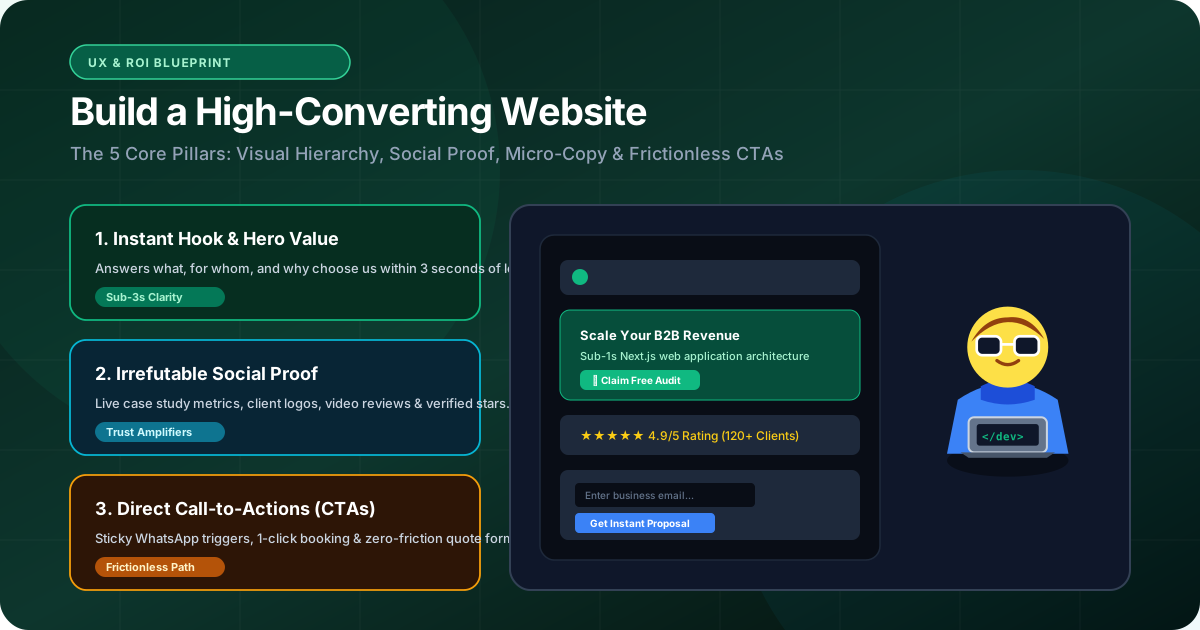
How to Build a High-Converting Website: The Blueprint That Turns Google Traffic Into Paying Customers
Learn how to build a high-converting website from scratch. Discover the exact engineering, UX design, copy structure, and speed optimizations that convert traffic into revenue.
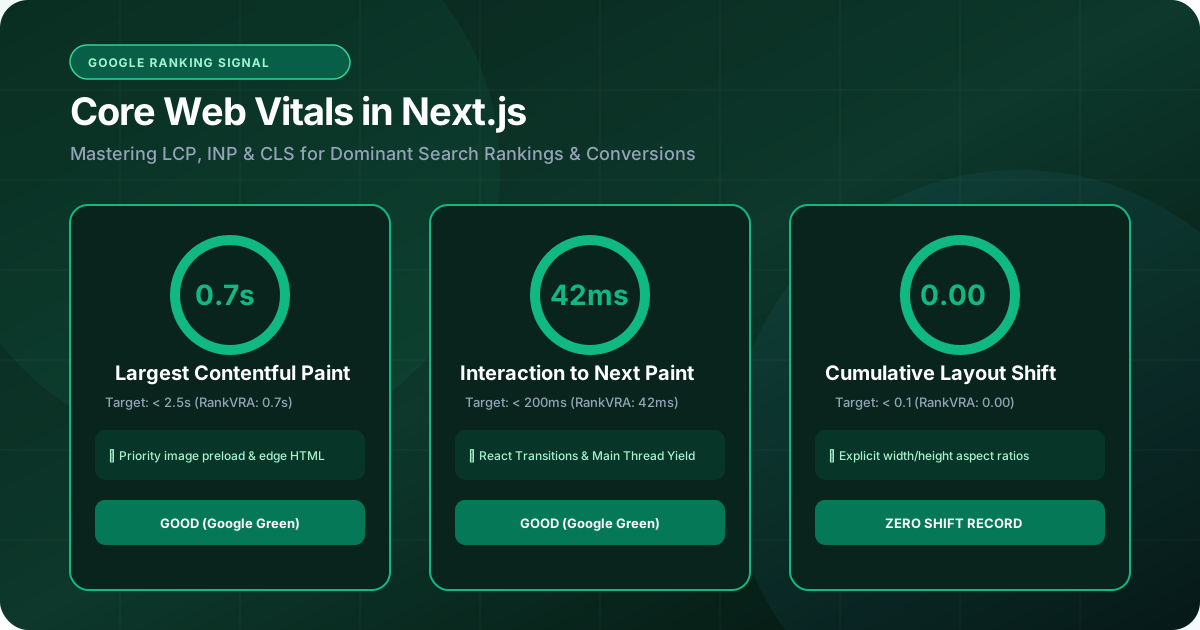
Core Web Vitals in Next.js: The Complete Guide to Sub-Second Load Speeds
Learn how to optimize Core Web Vitals in Next.js 15/16. Eliminate Interaction to Next Paint (INP) lag, master image optimization, and hit 99+ on Google PageSpeed.
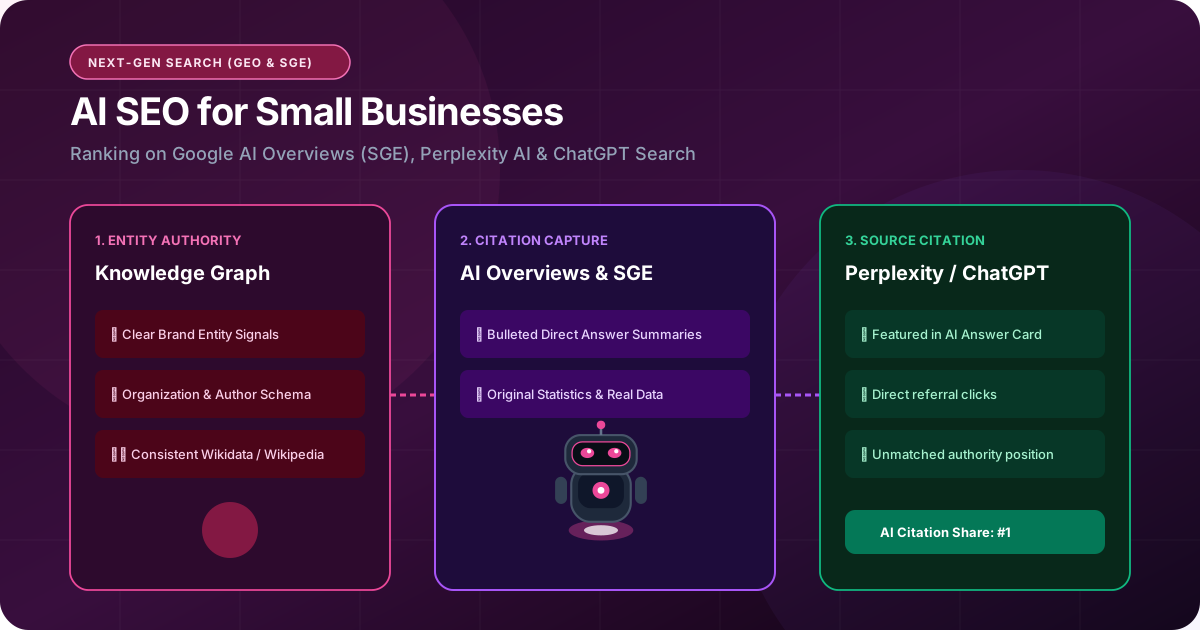
How AI Is Changing SEO & Digital Marketing for Small Businesses: Strategies for 2026 and Beyond
Understand how Google AI Overviews are changing search. Learn practical Generative Engine Optimization (GEO) strategies small businesses must use to stay visible and drive leads.