
How AI Is Changing SEO & Digital Marketing for Small Businesses: Strategies for 2026 and Beyond
A practical, fluff-free guide to surviving and thriving in the era of Google AI Overviews, Search Generative Experience (SGE), and Generative Engine Optimization (GEO).

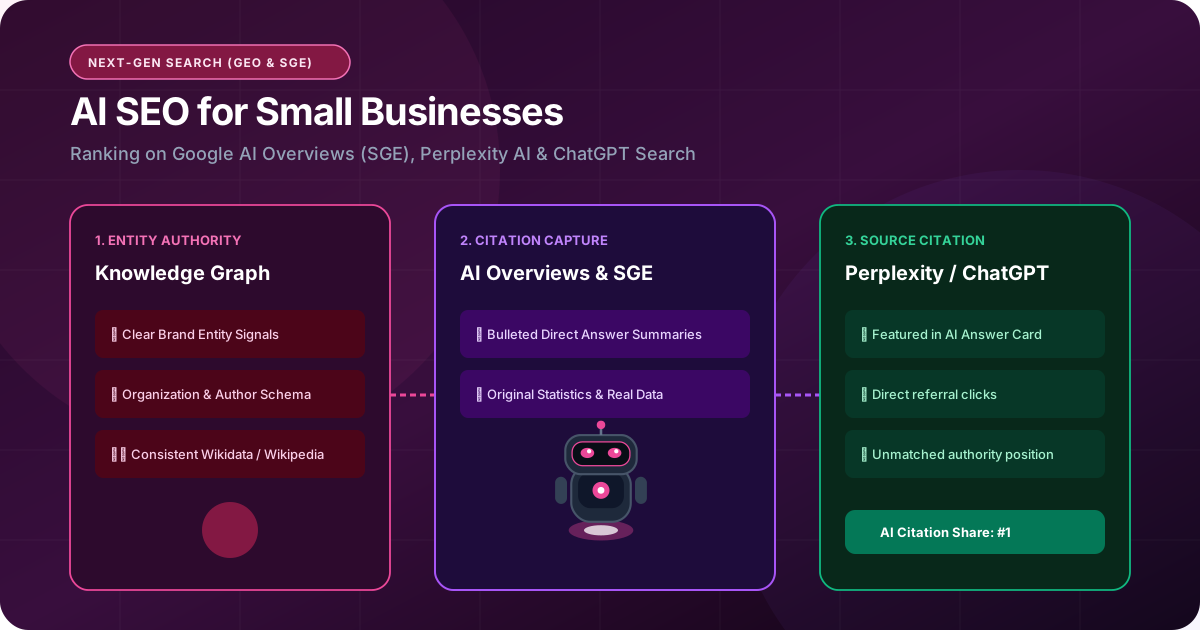
- 1. The Seismic Shift: From 10 Blue Links to AI Overviews
- 2. The End of Generic AI Content & Information Gain
- 3. What Is GEO (Generative Engine Optimization)?
- 4. E-E-A-T & Brand Entity Architecture for AI Engines
- 5. Practical AI Automations Small Businesses Should Actually Use
- 6. The 5-Step Playbook to Future-Proof Your Organic Traffic
Over the past twenty-four months, search engines have undergone the most profound technological shift since Google was founded in 1998. The rollout of Google AI Overviews (formerly Search Generative Experience / SGE), ChatGPT search, and Perplexity has transformed how people seek answers and discover businesses online. In the past, searching for a query returned a list of ten blue links. Today, generative AI summaries appear right at the top of the search engine results page, synthesizing answers directly for the user. For small and mid-sized business owners, this has created significant anxiety: Will AI wipe out my website traffic? Should I use AI to generate hundreds of blog posts? How can a local enterprise stay visible when Google answers questions right on the results page? This guide provides an honest, technical perspective on what AI search means for small businesses and lays out the exact strategies required to become the trusted source that AI engines cite and recommend.
1. The Seismic Shift: From 10 Blue Links to AI Overviews
Understanding the difference between zero-click queries and high-intent commercial searches
To adapt effectively, business owners must first understand where AI Overviews are deployed and where they are not.
AI Overviews heavily target broad, top-of-funnel informational queries (e.g., 'what is the capital of Rajasthan' or 'how does photosynthesis work'). For these informational topics, search engines now provide direct answers, leading to a noticeable drop in superficial informational website clicks (zero-click searches).
However, when users search for commercial, high-intent, or localized services (e.g., 'heritage resort in Udaipur for corporate retreat' or 'industrial marble slab exporter in Rajasthan'), AI models do not replace the service provider. Instead, they synthesize recommendations, cite authoritative local sources, and display structured business cards. Your objective is no longer merely ranking for broad curiosity keywords; it is positioning your business as the definitive, cited authority for commercial solutions.
2. The End of Generic AI Content & Information Gain
Why flooding your website with unedited ChatGPT copy guarantees algorithmic penalties
When generative AI tools became widely available, many low-tier agencies adopted a misguided tactic: generate hundreds of automated 800-word articles every week in an attempt to capture search traffic.
Google responded decisively through its Helpful Content System and core search quality updates. Google's algorithms now evaluate Information Gain—a patent-backed metric that measures whether an article introduces original data, first-person experience, or unique perspectives not already present in the existing web index.
Publishing generic AI summaries that simply rehash existing web pages offers zero Information Gain. These pages are identified, deprioritized, or removed from indexation. What ranks today is genuine, verifiable human expertise.
Google uses sophisticated classification models to identify mass-produced, unedited AI content. Using automated software to publish dozens of generic articles puts your entire domain at risk of algorithmic suppression.
3. What Is GEO (Generative Engine Optimization)?
How to structure content so LLMs and search engines cite your business as a trusted source
Generative Engine Optimization (GEO) is the practice of formatting your digital content so that large language models (LLMs) and search crawlers can easily extract, comprehend, and cite your data.
Direct-to-Answer Formatting: Provide concise, definitive answer paragraphs directly under major subheadings before diving into deeper context.
Structured Semantic Tables & Data Bullet Points: LLMs prioritize structured tables, technical specifications, and clear lists because they are easy to parse accurately without semantic ambiguity.
Verifiable Factual Statements: Include specific dates, exact model numbers, clear pricing guidelines, and documented geographic locations that models can verify against other reputable sources.
5. Practical AI Automations Small Businesses Should Actually Use
Where AI genuinely saves time without compromising brand authenticity
While generating automated blog articles is counterproductive, AI offers exceptional utility across operational workflows:
Customer Support & WhatsApp Lead Triaging: Deploying AI-assisted conversational bots to answer common guest questions, collect inquiry details, and route qualified leads to your sales team 24/7.
Automating Internal Data Organization: Using AI to transcribe customer discovery calls, extract key product requirements, and populate CRM records.
Competitor Gap Analysis & Research: Using AI models to analyze dozens of customer reviews across your industry to identify unmet needs and pricing complaints that you can address in your marketing.
6. The 5-Step Playbook to Future-Proof Your Organic Traffic
Concrete steps to execute for sustained organic search dominance
1. Focus on Commercial & Transactional Queries: Prioritize high-intent commercial keywords over broad informational queries that are susceptible to zero-click AI summaries.
2. Own Your First-Party Audience: Build direct customer relationships through email newsletters, WhatsApp channels, and direct inquiry funnels so you are never entirely dependent on search algorithms.
3. Double Down on Local Google Maps Optimization: AI models cannot fabricate a physical local business with 200 real customer reviews, verified photos, and steady foot traffic.
4. Upgrade Your Web Infrastructure: Ensure your website is fast, mobile-first, and cleanly coded so crawlers can index your content without performance bottlenecks.
5. Publish Opinionated, Experience-Driven Insights: Share your real-world business opinions, proprietary pricing models, and direct case studies that demonstrate authentic authority.
| Traditional Outdated SEO Tactic | Why It Fails in the AI Era | RankVRA Modern AI-Resilient Approach |
|---|---|---|
| Mass-producing 100 generic AI blog posts | Zero information gain; flagged as automated spam | Publishing 5 in-depth, research-backed industry guides by real authors |
| Repeating exact-match keywords in text | Algorithms use semantic entity understanding | Structuring content around user intent, clear tables, and FAQs |
| Targeting broad curiosity queries | Traffic lost to Google AI Overview zero-click answers | Targeting high-intent bottom-funnel commercial keywords |
| Ignoring structured schema markup | AI crawlers struggle to verify brand relationships | Comprehensive Organization, LocalBusiness, and FAQ schema graph |
The Bottom Line & Next Steps
AI is not the death of SEO; it is the death of lazy, low-quality marketing. For small and mid-sized businesses willing to invest in genuine technical excellence, verified expertise, and authentic human authority, the AI era represents a massive competitive opportunity. At RankVRA, we help forward-thinking companies navigate the modern search landscape through technical web development and AI-resilient SEO strategies. Explore our AI automation solutions, learn about our SEO services, or request a Free Growth Audit today.
Questions Business Leaders Ask About AI SEO for small business
Will Google penalize our website if we use AI to help draft content?▾
Google has explicitly stated that content is judged on its quality, helpfulness, and expertise (E-E-A-T), not on how it was produced. However, using unedited AI text that simply summarizes what is already on the web results in low Information Gain scores, causing pages to rank poorly. Using AI as a research tool while having experienced human experts write and edit the final publication is entirely acceptable.
What is the difference between SEO and GEO (Generative Engine Optimization)?▾
SEO focuses on ranking websites in traditional search results (the 10 blue links and Google Maps). GEO focuses on optimizing content so that generative AI engines (like Google AI Overviews, Perplexity, and ChatGPT) select, cite, and recommend your business within synthesized answers.
How can a small business get featured in Google AI Overviews?▾
To be cited in AI Overviews, your content must provide clear, direct answers to specific user questions, utilize structured tables and bulleted summaries, implement valid JSON-LD schema, and demonstrate established topical authority through verified author credentials and external brand citations.
How does RankVRA help businesses adapt to AI search updates?▾
We engineer full-stack website architectures that combine sub-second loading speeds and rich schema graphs with high-intent, human-crafted content strategies designed to win both traditional rankings and AI engine citations.

Written by Naveen Panchal
AuthorFounder & Lead Technical Architect, RankVRA
Naveen Panchal is the Founder and Technical Director of RankVRA. He specializes in full-stack web engineering, algorithmic search optimization, and performance funnels for hospitality, manufacturing, and local service enterprises across Rajasthan and internationally.
Want to implement these strategies for your business?
RankVRA engineers high-speed web platforms, localized Google Maps dominance, and algorithmic SEO funnels that turn searchers into long-term clients.
Related Growth Blueprints
Explore more strategic articles from the RankVRA engineering desk.
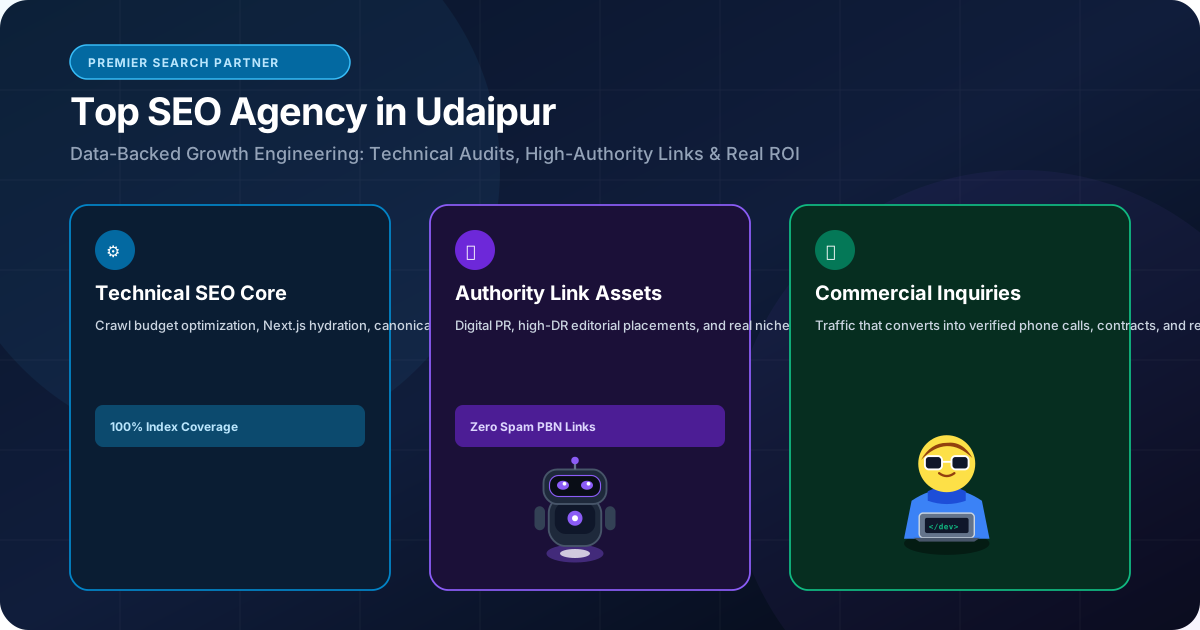
SEO Agency in Udaipur: How to Choose the Right Partner for Real Business Growth
Looking for an SEO agency in Udaipur? Discover the exact criteria, essential technical capabilities, red flags to avoid, and the questions to ask before signing a retainer.
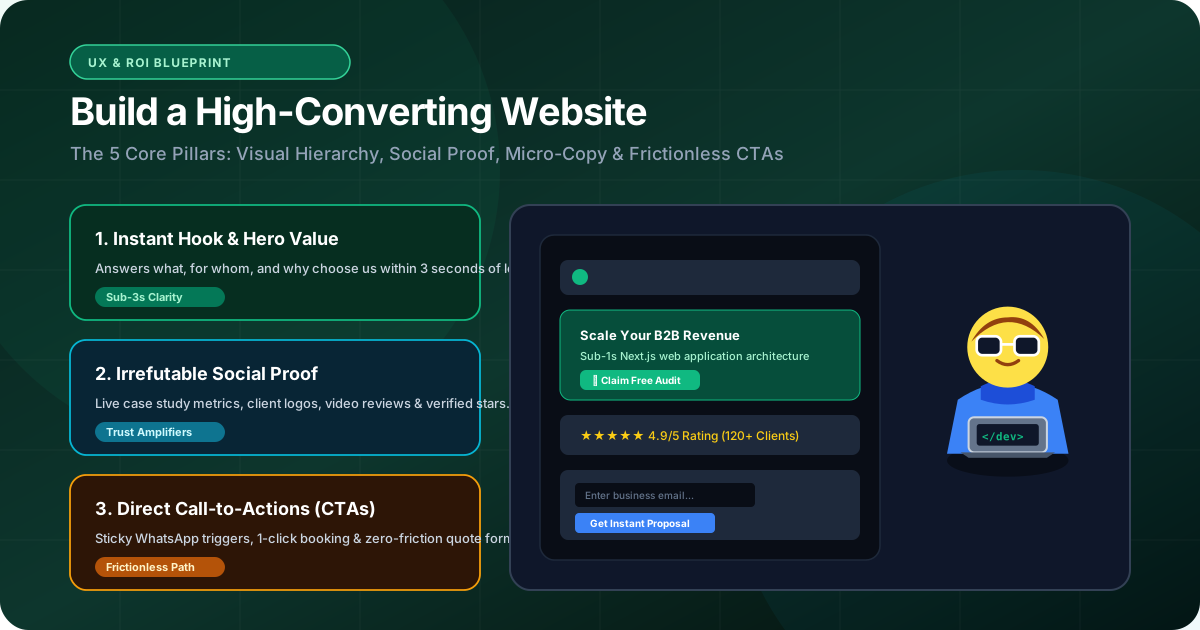
How to Build a High-Converting Website: The Blueprint That Turns Google Traffic Into Paying Customers
Learn how to build a high-converting website from scratch. Discover the exact engineering, UX design, copy structure, and speed optimizations that convert traffic into revenue.
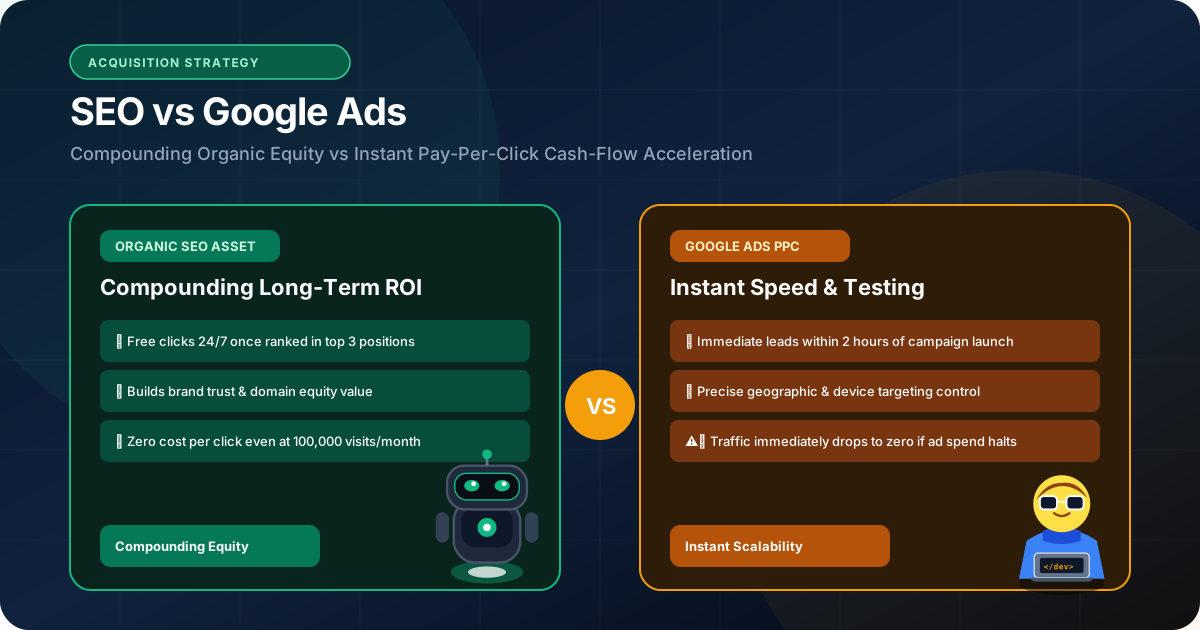
SEO vs Google Ads: Which Strategy Generates Higher ROI for Your Business? (2026 Comparison)
Struggling to choose between SEO and Google Ads? Compare costs, revenue timelines, customer acquisition economics, and learn how to run both in synergy for maximum ROI.