
Technical SEO Checklist: 25 Critical Fixes for Your Website
A software engineer's comprehensive audit guide to crawlability, Core Web Vitals, indexation health, and structured data architecture.


- 1. The Engineering Foundations of Technical SEO
- 2. Crawlability, Sitemaps & Indexation (Checks 1–6)
- 3. Architecture, Redirects & Error Handling (Checks 7–11)
- 4. Core Web Vitals & Web Performance (Checks 12–16)
- 5. Semantic Structured Data & JavaScript SEO (Checks 17–21)
- 6. Internationalization, Orphan Pages & Hygiene (Checks 22–25)
- 7. The Complete 25-Point Technical SEO Audit Table
- 8. Executing a Professional Technical SEO Audit with RankVRA
You can spend months producing exceptional editorial content, but if your website has broken canonical tags, creeping redirect loops, bloated JavaScript bundles, or blocked crawl paths in your robots.txt, Google's search spiders will fail to properly index your pages. Technical SEO is the foundational software engineering discipline that ensures search engine crawlers can effortlessly discover, parse, render, and rank your digital assets. In Google's modern rendering environment, algorithmic systems place heavy scrutiny on server responsiveness, mobile viewport stability, and semantic schema graphs. This complete 25-point technical SEO checklist walks you through every critical backend and frontend optimization required to eliminate crawl errors, satisfy Core Web Vitals, and unlock your website's full organic ranking potential.
A technical SEO checklist evaluates the structural and engineering health of a website to ensure search engines can seamlessly discover, crawl, render, and index every critical URL. The 25 non-negotiable checks span security (HTTPS/TLS), crawlability (robots.txt, XML sitemaps, canonical tags), performance (Core Web Vitals LCP, INP, CLS), architecture (clean URLs, 301 redirects, eliminating 404s/soft-404s), and rich semantics (Schema.org JSON-LD structured data).
1. The Engineering Foundations of Technical SEO
Bridging the gap between software development and algorithmic search
Technical SEO is frequently misunderstood as a simple matter of installing an SEO plugin or tweaking meta tags. In reality, technical SEO is an engineering discipline that intersects server configuration, DOM rendering pipelines, network protocols, and data structuring.
When search engine crawlers like Googlebot encounter high server latency (TTFB > 800ms) or get trapped in circular redirect chains, they throttle their crawl rate to avoid overloading your server. This causes newly published articles and updated service pages to linger unindexed for weeks.
By systematically addressing the 25 technical checkpoints outlined below, you eliminate friction, maximize your domain's crawl budget, and provide search engines with an unambiguous machine-readable roadmap of your site's hierarchy.
2. Crawlability, Sitemaps & Indexation (Checks 1–6)
Ensuring search engine spiders can access and understand your pages
Check 1: Enforce Complete HTTPS & Modern TLS. Ensure your entire website serves over secure HTTPS with valid TLS 1.3 certificates. Verify that HTTP traffic automatically 301-redirects to HTTPS and implement HTTP Strict Transport Security (HSTS) headers.
Check 2: Optimize robots.txt Syntax. Your robots.txt file must provide clear crawl directives without accidentally disallowing vital CSS, JavaScript, or public URL folders. Always include a direct link to your primary XML sitemap at the bottom of the file.
Check 3: XML Sitemap Structure & Hygiene. Your XML sitemap must dynamically list all 200-status canonical URLs and exclude 404s, 301 redirects, utility pages (such as admin panels or thank-you pages), and noindexed URLs. Submit your sitemap directly to Google Search Console.
Check 4: Self-Referencing Canonical Tags. Every indexable page must contain a clean `<link rel="canonical" href="..." />` tag pointing to its absolute canonical URL. This prevents duplicate content penalties caused by query tracking parameters (UTMs) or alternate URL paths.
Check 5: Indexation Controls & Meta Robots. Audit your pages for erroneous `noindex` or `nofollow` directives in `<meta name="robots">` tags or `X-Robots-Tag` HTTP headers, ensuring your commercial landing pages are fully indexable.
Check 6: Crawl Budget & Server Log Analysis. Review your web server access logs to observe how frequently Googlebot visits, which pages consume the most crawl resources, and whether bots are wasting cycles crawling non-essential faceted filters.
3. Architecture, Redirects & Error Handling (Checks 7–11)
Streamlining site taxonomy and eliminating dead ends
Check 7: Eliminate Redirect Chains and Loops. Every redirect should be a direct 1-to-1 hop (301 Permanent Redirect) from the old URL to the final destination URL. Redirect chains (A -> B -> C) dilute PageRank equity and introduce unnecessary network latency.
Check 8: Custom 404 Pages & Soft-404 Elimination. Ensure non-existent URLs return a true HTTP 404 or 410 status code. Prevent 'soft 404s'—pages that display a 'not found' message to users but return an HTTP 200 OK status to search spiders.
Check 9: Broken Internal & External Links. Routinely crawl your website with tools like Screaming Frog or Sitebulb to detect and repair broken internal links (404s) and outdated external resource links that degrade user experience.
Check 10: Clean, Predictable URL Structure. Maintain lowercase, hyphen-separated, human-readable URLs that mirror your site hierarchy (e.g., `/services/web-development` rather than `/?p=492&cat=web`).
Check 11: Server Response Codes (5xx Monitoring). Configure automated alerting for HTTP 500, 502, or 503 server errors. Persistent 5xx errors signal infrastructure instability to Googlebot, causing rapid demotions in crawl priority.
4. Core Web Vitals & Web Performance (Checks 12–16)
Delivering sub-second, rock-solid page rendering
Check 12: Server Response Time (TTFB < 800ms). Time to First Byte measures how quickly your web server responds with the first byte of data. Utilize edge caching, CDN routing, and optimized database queries to maintain sub-800ms TTFB globally.
Check 13: Largest Contentful Paint (LCP < 2.5s). Optimize your hero section so the largest visible element (typically a hero banner or primary heading) renders in under 2.5 seconds on mobile 4G connections. Preload critical hero images and inline critical CSS.
Check 14: Interaction to Next Paint (INP < 200ms). Eliminate main-thread blocking tasks. Break long JavaScript tasks into smaller chunks, defer non-critical third-party analytics scripts, and keep user interactions snappy under 200 milliseconds.
Check 15: Cumulative Layout Shift (CLS < 0.1). Ensure elements do not shift unexpectedly as assets load. Always define explicit `width` and `height` attributes on images, reserve layout space for dynamic embeds, and avoid late font swaps.
Check 16: Modern Image Compression & Responsive Srcset. Serve next-gen image formats (AVIF and WebP) with responsive `srcset` definitions, ensuring mobile devices download lightweight, correctly dimensioned assets.
5. Semantic Structured Data & JavaScript SEO (Checks 17–21)
Empowering machines to interpret your content and entity relationships
Check 17: Schema.org JSON-LD Implementation. Implement valid structured data graphs across your site: `Organization` on the homepage, `Article` or `BlogPosting` on editorial posts, `Service` on service pages, and `FAQPage` where relevant.
Check 18: BreadcrumbList Structured Data. Add semantic breadcrumb navigation marked up with `BreadcrumbList` schema to provide users with intuitive navigation and earn enhanced breadcrumb snippets in Google search results.
Check 19: JavaScript SEO & Server-Side Rendering (SSR). If your website uses React, Vue, or Angular, ensure critical content and links are pre-rendered on the server via Next.js or Nuxt so search crawlers can read the complete DOM without waiting for client execution.
Check 20: Mobile-First Viewport & Tap Target Compliance. Verify that `<meta name="viewport" content="width=device-width, initial-scale=1">` is present, font sizes are legible without zooming, and interactive buttons feature at least 48x48px tap targets.
Check 21: Internal Link Depth & PageRank Flow. Ensure your most important commercial pages are accessible within 3 clicks of the homepage. Use descriptive anchor text and avoid burying valuable pages behind complex multi-level menus.
6. Internationalization, Orphan Pages & Hygiene (Checks 22–25)
Advanced hygiene checks to safeguard domain health
Check 22: Pagination Handling. Use clean self-referencing canonicals and clear navigation links (`rel="prev"` and `rel="next"` where appropriate) on paginated category archives to ensure spiders crawl all archived assets.
Check 23: Hreflang Implementation for Multi-Regional Sites. If you serve multi-lingual or multi-regional audiences, implement bidirectional `hreflang` annotations to instruct Google which language or regional variation to display.
Check 24: Identification and Removal of Orphan Pages. Detect pages that have zero internal links pointing to them. Either connect these orphan pages into relevant topical clusters or 301-redirect them to appropriate parent hubs.
Check 25: Thin Content & Parameter Deduplication. Identify low-value or thin pages (pages with minimal unique text or auto-generated search filters) and consolidate them or apply `noindex` directives to preserve domain quality.
7. The Complete 25-Point Technical SEO Audit Table
A systematic reference table for your engineering and SEO teams
Review this downloadable-style reference checklist before every major website launch, redesign, or quarterly technical audit.
| # | Audit Item | Core Requirement | Ideal Threshold / Target |
|---|---|---|---|
| 1 | HTTPS / SSL Security | Enforce TLS 1.3 & HSTS across all pages | 100% secure; zero mixed content warnings |
| 2 | robots.txt Configuration | Ensure no critical assets are blocked; link XML sitemap | Zero disallow on CSS/JS/pages |
| 3 | XML Sitemap Health | Include only 200-OK canonical URLs; submit to GSC | Updated dynamically upon publishing |
| 4 | Canonical Tags | Self-referencing canonicals on every indexable URL | Absolute URLs matching protocol and domain |
| 5 | Indexation Directives | Audit meta robots tags for accidental noindex | Zero commercial pages marked noindex |
| 6 | Crawl Budget Efficiency | Eliminate infinite search parameter traps | Googlebot spends 90%+ on high-value URLs |
| 7 | Redirect Hygiene | Eliminate redirect chains (A->B->C) and loops | All redirects resolved in 1 direct 301 hop |
| 8 | 404 Error Handling | Proper 404/410 status codes; custom helpful 404 page | Zero soft-404 errors in Search Console |
| 9 | Broken Link Clean-up | Repair internal dead links and broken external URLs | Zero 4xx internal crawl errors |
| 10 | Clean URL Structure | Lowercase, hyphenated, descriptive keyword paths | No tracking parameters or ugly IDs in slugs |
| 11 | 5xx Server Error Alerting | Monitor server stability and gateway timeouts | Zero persistent 500/502/503 errors |
| 12 | Time to First Byte (TTFB) | Optimize database queries, edge caching, and server compute | TTFB < 800ms globally (target < 300ms) |
| 13 | Largest Contentful Paint (LCP) | Preload hero assets; eliminate render-blocking CSS | LCP < 2.5 seconds on 75th percentile of mobile |
| 14 | Interaction to Next Paint (INP) | Break long tasks; minimize main-thread execution lag | INP < 200 milliseconds |
| 15 | Cumulative Layout Shift (CLS) | Declare explicit image dimensions; reserve font space | CLS < 0.1 |
| 16 | Next-Gen Image Formats | Serve WebP/AVIF formats with responsive srcset | Sub-150KB image payloads on mobile |
| 17 | Schema.org JSON-LD | Valid Organization, Article, LocalBusiness, FAQPage graphs | Zero critical errors in Rich Results Test |
| 18 | Breadcrumb Markup | Implement semantic BreadcrumbList schema | Breadcrumbs visible in SERP snippets |
| 19 | JavaScript SEO / SSR | Server-Side Render (SSR) critical HTML using Next.js | Complete DOM visible in initial raw HTML source |
| 20 | Mobile Viewport & Touch | Standard viewport tag; minimum 48px tap targets | 100% Mobile-Friendly validation |
| 21 | Internal Link Depth | Important commercial pages within 3 clicks of homepage | Logical hub-and-spoke cluster links |
| 22 | Pagination Architecture | Clean self-referencing canonicals on archive pages | Spiders crawl deep historical pages seamlessly |
| 23 | Hreflang Configuration | Bidirectional alternate language/region tags | Zero hreflang return tag errors in GSC |
| 24 | Orphan Page Discovery | Identify and link pages with zero incoming internal links | Zero orphaned commercial pages |
| 25 | Thin Content Consolidation | Merge or noindex low-value, duplicate, or empty pages | Every indexed URL offers unique substantive value |
8. Executing a Professional Technical SEO Audit with RankVRA
Turning audit findings into production-ready software code
Identifying technical SEO defects is only half the battle; resolving them requires experienced full-stack web engineers who can modify production codebases, optimize Next.js server pipelines, rewrite database queries, and debug complex CDN edge caching configurations.
RankVRA is an engineering-led digital agency. Our technical architects perform in-depth code-level audits and directly implement the fixes your site needs to achieve perfect Core Web Vitals, flawless crawl coverage, and dominant Google search rankings.
The Bottom Line & Next Steps
Technical SEO is not a one-time project; it is continuous architectural hygiene. As modern web applications evolve with new features, dependencies, and content updates, technical regressions can quietly introduce crawl barriers that undermine your organic visibility. By adhering to this 25-point technical SEO checklist, your engineering team can safeguard your website's structural health and ensure Googlebot can seamlessly discover, evaluate, and reward your digital assets. If you want our senior architects to audit your website's codebase and server infrastructure, request a free technical SEO audit from RankVRA today.
Questions Business Leaders Ask About technical SEO checklist
How often should a business run a technical SEO audit?▾
A comprehensive technical SEO audit should be conducted at least quarterly, as well as immediately before and after any major website redesign, CMS migration, domain restructuring, or significant codebase deployment.
What is the difference between crawling and indexing in technical SEO?▾
Crawling is the discovery process where Googlebot fetches web pages by following links and reading sitemaps. Indexing occurs after crawling, when Google parses the page's rendered content, evaluates its quality, and stores it in its database to be served in search results.
Can Core Web Vitals directly impact my Google rankings?▾
Yes. Google uses Core Web Vitals (LCP, INP, and CLS) as an official page experience ranking signal. While content relevance remains primary, when competing against similar quality content, superior Core Web Vitals scores provide a distinct competitive ranking advantage.
What tools do professional engineers use to perform technical SEO audits?▾
Industry-standard tools include Google Search Console, Chrome DevTools, Google PageSpeed Insights, Screaming Frog SEO Spider, Sitebulb, WebPageTest, and the Google Rich Results Test for Schema.org validation.
Why are redirect chains bad for technical SEO?▾
Redirect chains (URL A -> URL B -> URL C) waste Google's crawl budget, increase page load latency for users, and can dilute PageRank link equity. Resolving them into a single 301 redirect improves both crawl speed and ranking stability.
How does RankVRA handle technical SEO differently from traditional agencies?▾
Unlike marketing agencies that simply deliver a generic PDF of automated scanner findings, RankVRA's team consists of full-stack software engineers who directly inspect, modify, and optimize your production codebase (Next.js, React, server configurations, and database queries).

Written by Naveen Panchal
AuthorFounder & Lead Technical Architect, RankVRA
Naveen Panchal is the Founder and Technical Director of RankVRA. He specializes in full-stack web engineering, Next.js architecture, and algorithmic search optimization for high-growth enterprises.
Explore Core Commercial Capabilities
- Google Search Central: Google Search Central: Technical SEO DocumentationOfficial Reference
- web.dev by Google: web.dev: Learn Core Web VitalsOfficial Reference
- Schema.org: Schema.org Rich Results SpecificationsOfficial Reference
Is Technical Debt Silently Killing Your Google Rankings?
Do not let crawl errors, slow Core Web Vitals, or broken canonicals sabotage your organic traffic. Request a thorough code-level Technical SEO Audit from RankVRA's engineering architects today.
Related Growth Blueprints
Explore more strategic articles from the RankVRA engineering desk.
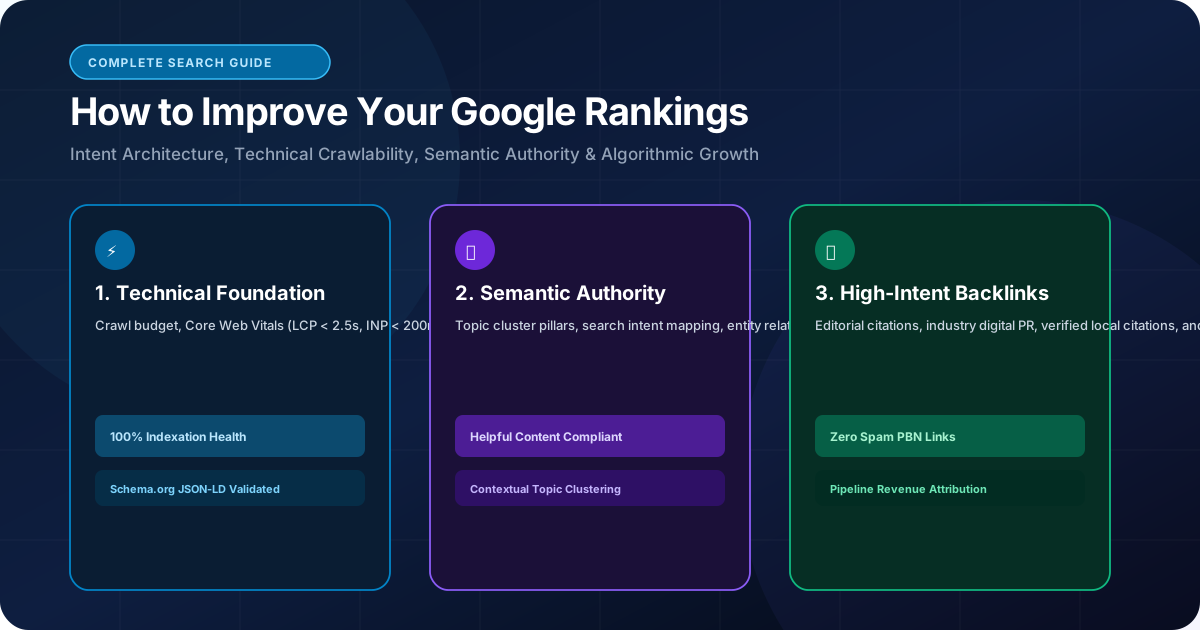
How to Improve Your Google Rankings: A Complete SEO Guide for Businesses
Learn how to improve Google rankings with this complete SEO guide for businesses. Discover proven strategies for technical SEO, content quality, and backlinks.
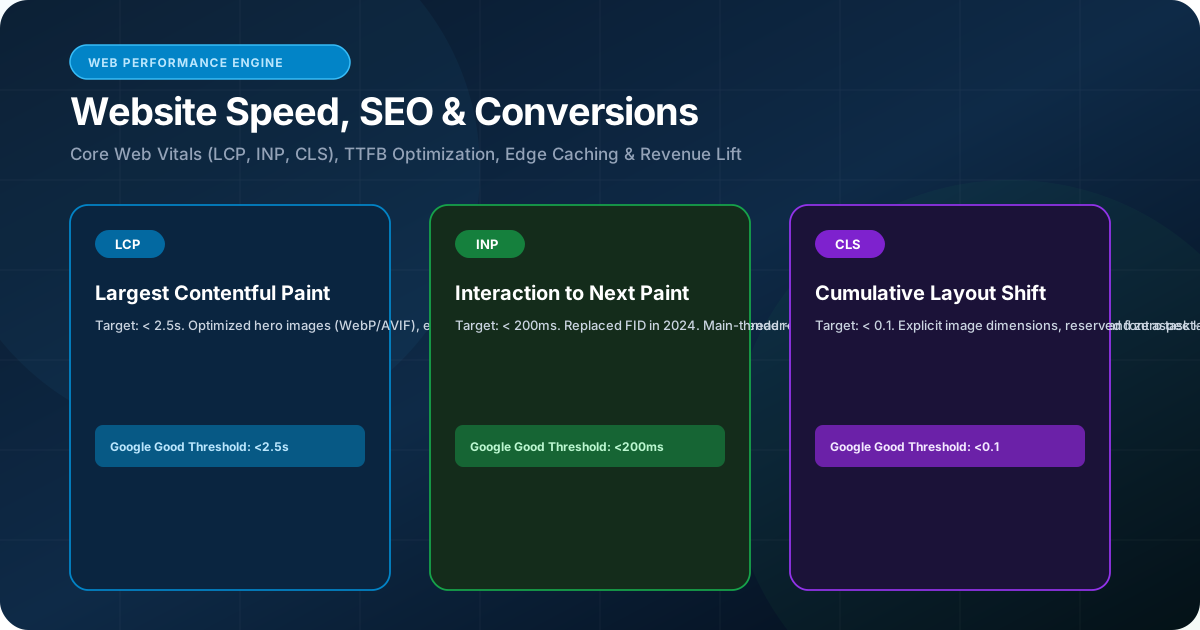
How Website Speed Affects SEO, User Experience, and Conversions
Discover how website speed impacts SEO, user experience, and conversions. Learn practical steps to optimize Core Web Vitals (LCP, INP, CLS) and accelerate load times.
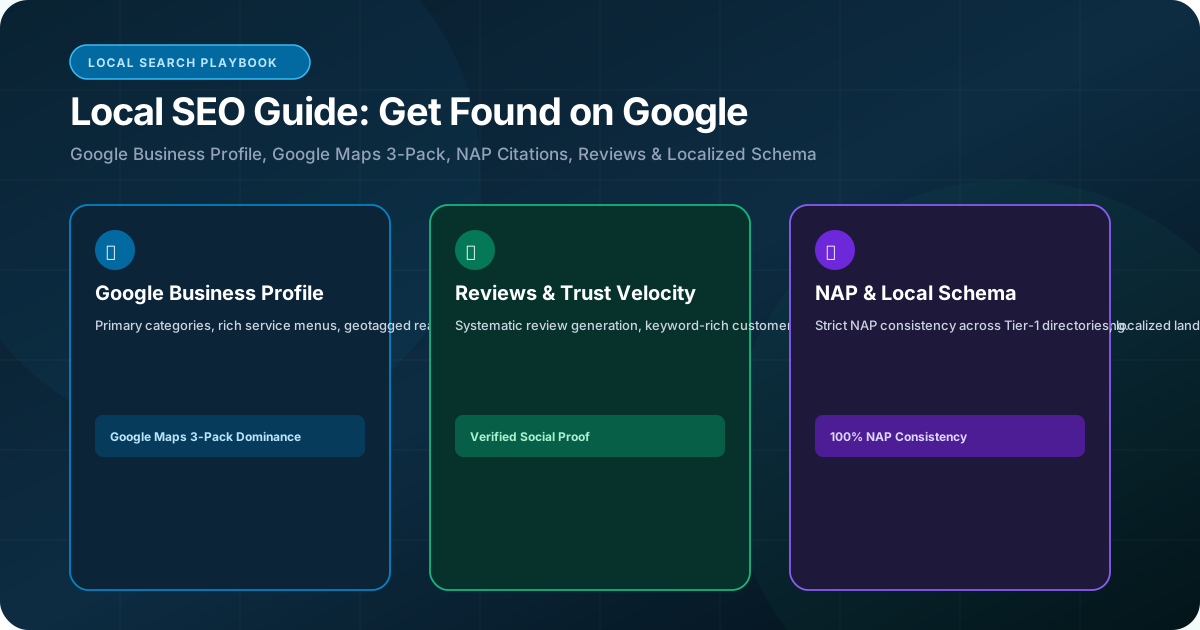
Local SEO Guide: How to Get Your Business Found on Google Maps & Search
Master local SEO with this comprehensive guide. Learn how to optimize your Google Business Profile, build local citations, and rank in the Google Maps 3-Pack.
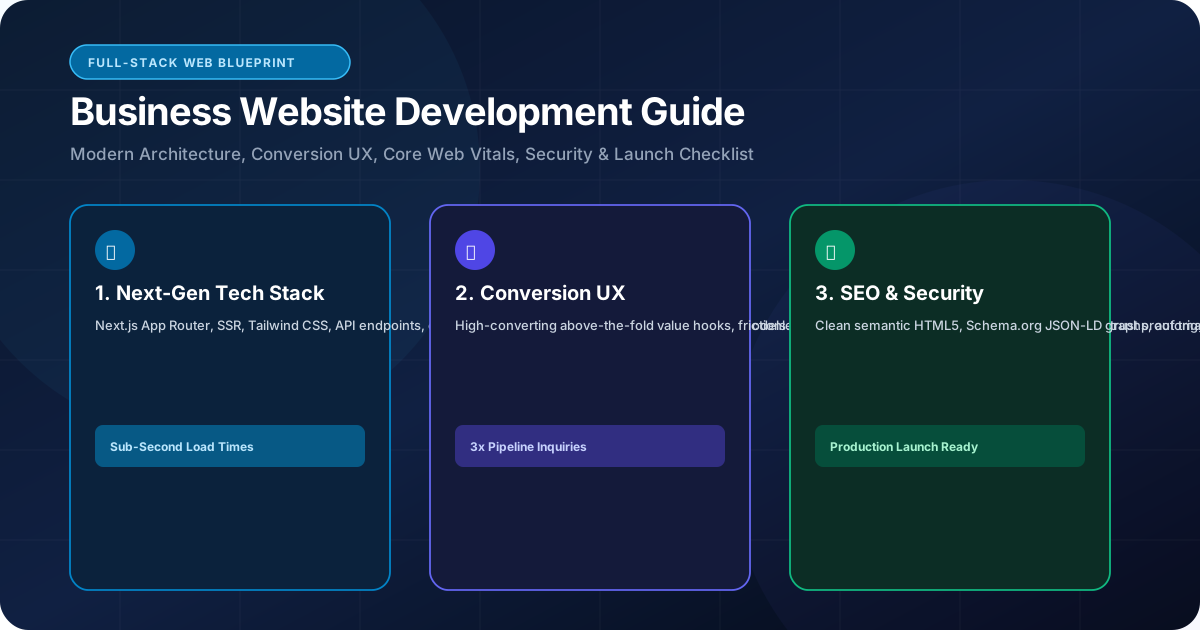
Website Development Guide: How to Build a High-Converting Business Website
Learn how to build a high-converting business website. Master modern UX design, responsive development, Core Web Vitals, and review our launch checklist.